There is an honest version of this conversation that most training materials do not have. Most survey professionals working with Qimera, CARIS or EIVA in 2026 are running AI-assisted processing.
The machine learning classification tools are in the standard workflow, not a separate module you opt into. They are running whether or not you have received any training on them.
That is not a criticism of the people running them. The software updates outpaced the training infrastructure. OEM certification syllabi were written before these features existed or cover them in a single module that does not address production use. The result is that a meaningful number of competent survey professionals are validating outputs from processes they have not been formally trained on.
This article is an attempt to close some of that gap.
What the machine learning tools are actually doing
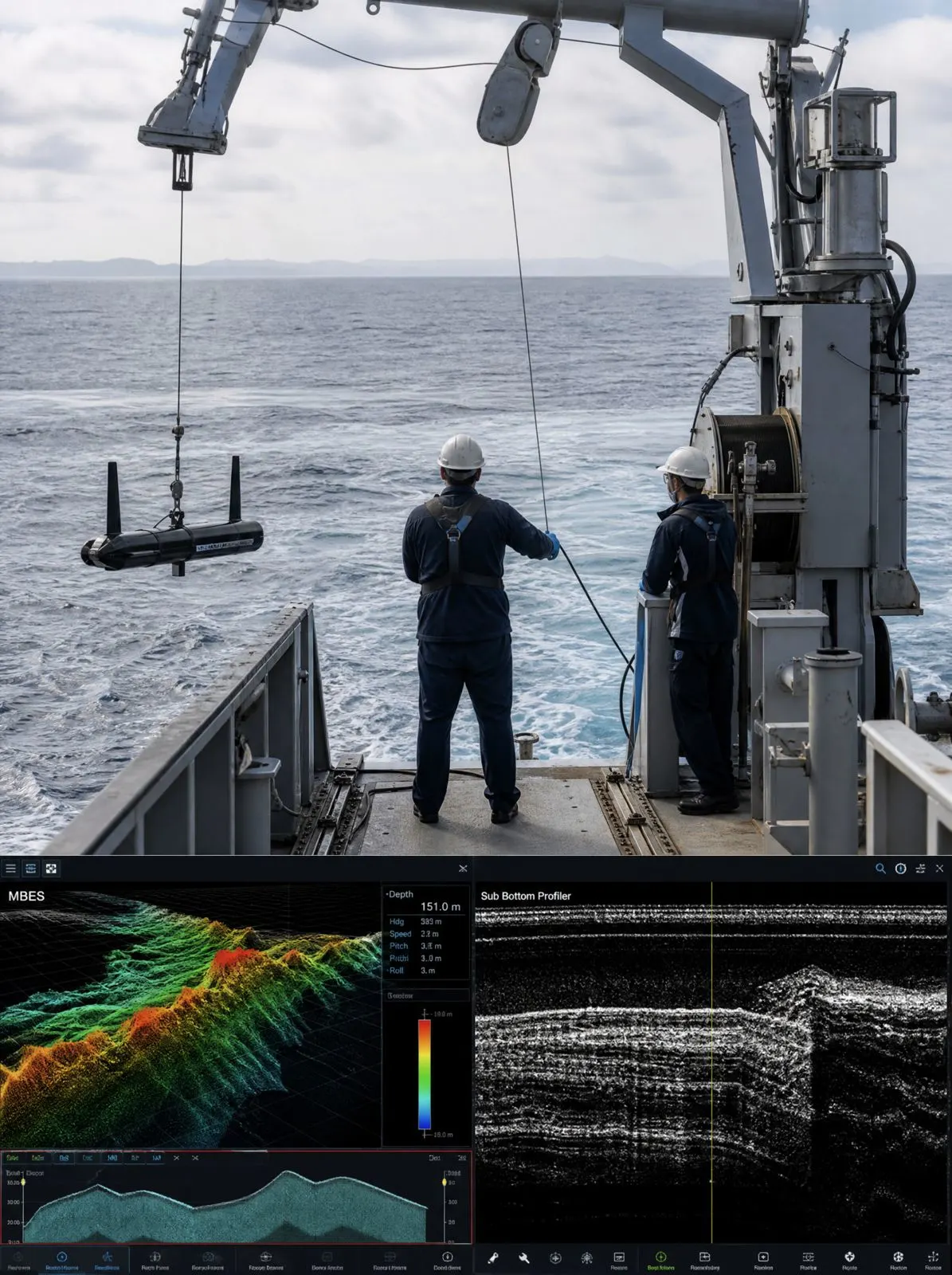
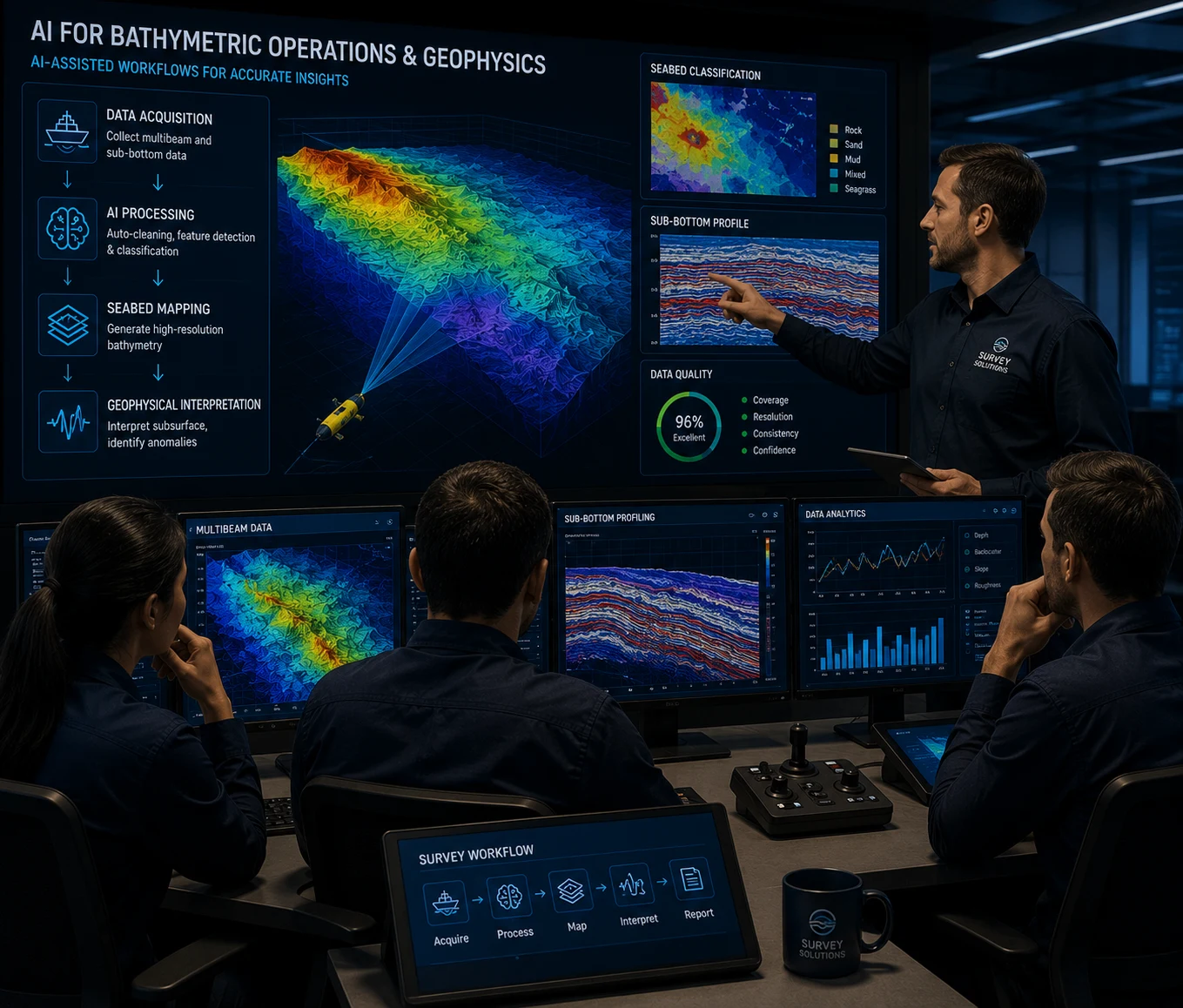
In Qimera, the Dynamic Surface and integrated ML tools are primarily doing two things: automated bottom detection refinement and backscatter classification.
The automated bottom detection uses the sonar geometry, the acoustic return characteristics, and training data to refine the initial bottom pick. On standard seabed types with good acoustic conditions, this reduces the manual cleaning burden significantly. On complex or challenging data, it creates confident incorrect detections that require more careful manual review than unprocessed data would.
The backscatter classification tools — in Qimera, CARIS Mosaics, or standalone tools like QPS Fledermaus — apply machine learning algorithms trained on labelled substrate datasets. Sand, gravel, rock, shell: the classification is generated from acoustic backscatter intensity and angular response. The tool is making a probabilistic assignment based on training data, not a definitive determination based on ground truth.
The confidence score attached to each classification is meaningful. Most workflows do not treat it that way.