RUVIRA OFFSHORE INSIGHTS · ARTICLE 02

CLIENT BRIEFING · OPERATORS & PROJECT MANAGERS · 6 MIN READ

AI and offshore transformation: a realistic breakdown.

The framing most people apply to AI in offshore energy is that it is coming. A technology to prepare for. A future readiness question. It is already here. That changes the question.

AI TRAINING PRACTICE • OPERATIONAL ADOPTION • 2026 ANALYSIS
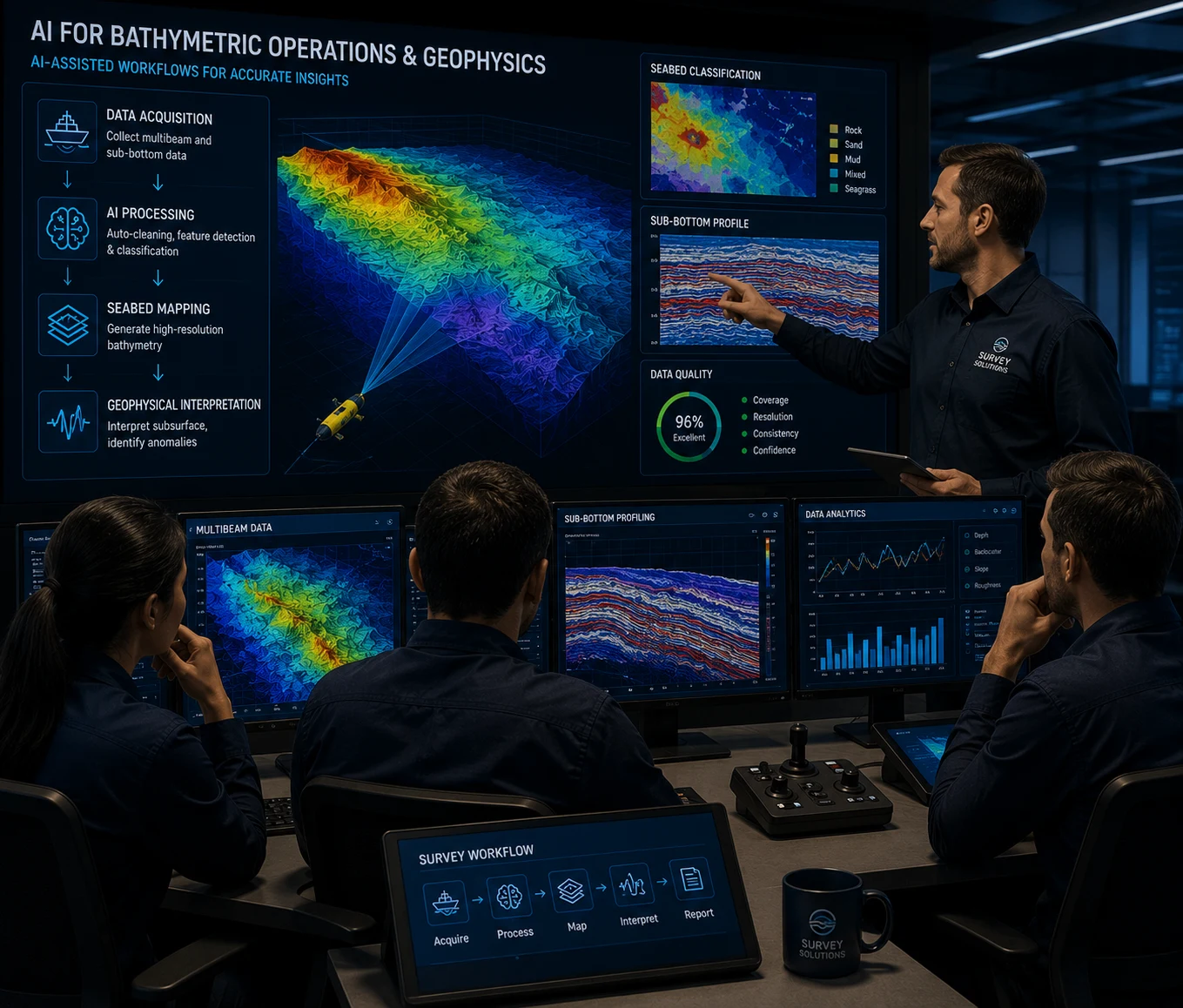
Man at curved bank of monitors in dark control room, over-shoulder angle, screens showing sonar and platform monitoring data with blue ambient light

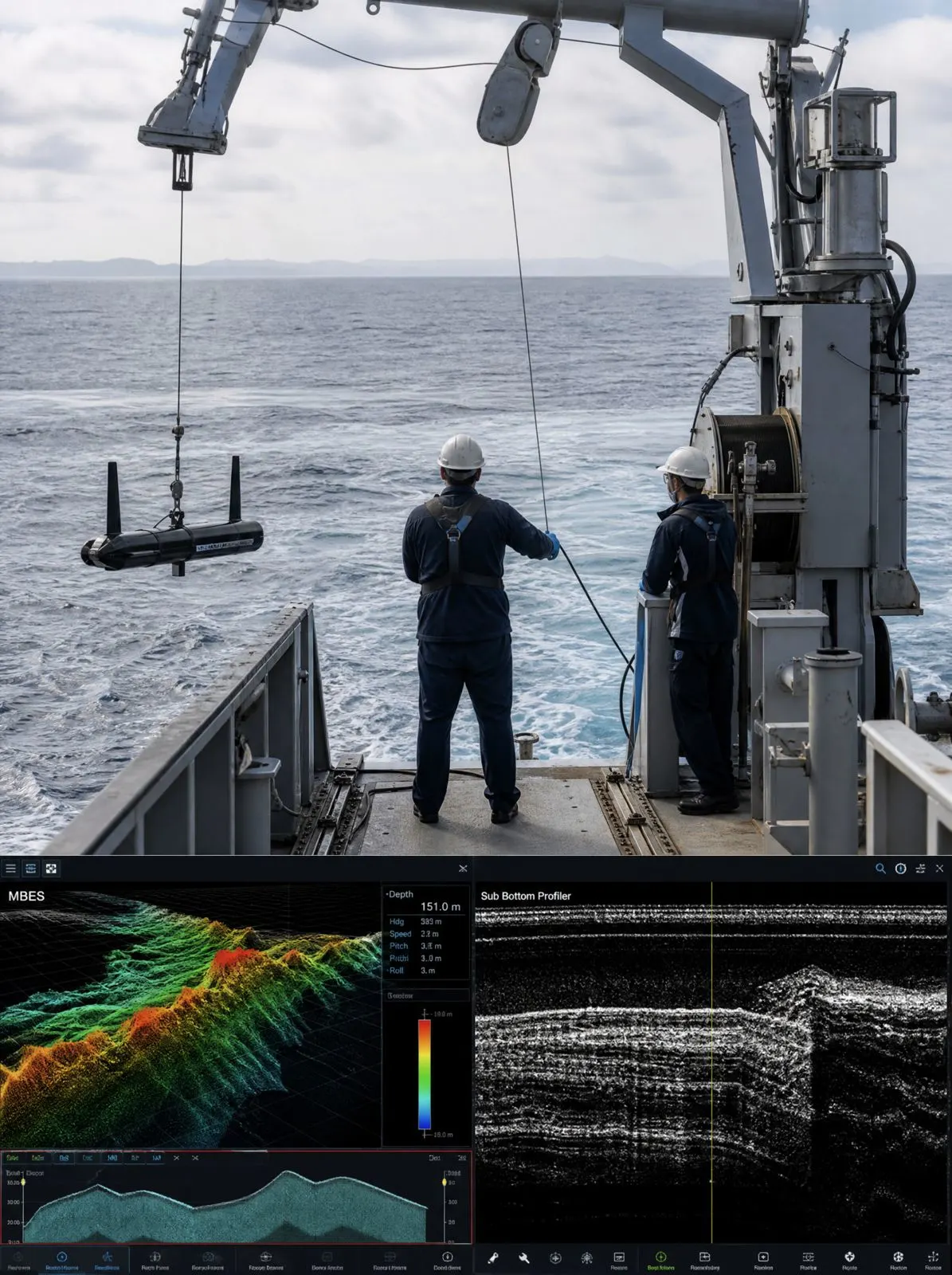
Machine learning is integrated into the current production versions of Qimera, CARIS HIPS and SIPS, and EIVA NaviSuite.

Automated classification. Bottom detection refinement. Anomaly flagging. These are not beta features or optional add-ons — they are in the standard workflow. Most survey teams using these platforms are running AI-assisted processing whether they know it or not.

The same is true in dynamic positioning. Kongsberg and Rolls-Royce systems have had predictive elements in their station-keeping algorithms for several years. In subsea inspection, AI-assisted image analysis for corrosion and structural assessment is being used by major operators in the North Sea and the Gulf of Mexico.

The transition from traditional offshore crew models to remote operations centres — unmanned or minimally-manned platforms controlled from onshore — is further along than most people outside the operators running these programmes realise.

None of this is speculative. The question is not whether AI is part of offshore operations. The question is whether the people operating these systems understand what the AI is doing.
“The gap is not between offshore operations and AI. It is between the AI features now in the tools and the training that was written before those features existed.”

Ruvira Offshore Technical Intelligence · 2026 Analysis

The Specific Problem: Certification Lag vs Production Reality

This is the specific problem. OEM certification programmes for survey and inspection platforms were written before the AI layers were added, or cover them in a single module that does not address production use.

A surveyor who completed their Qimera certification two years ago has been trained on the software as it was, not as it is. The machine learning classification module may be running in their current workflow without them having received any formal training on how to set it up, interpret its confidence scores, or QC its outputs against manual validation.

Key Operational Insight: That is not a failure of the individual. The training just has not kept up. For operators, the practical implication is that you cannot assess AI readiness by looking at certification lists.

Certified on Qimera does not mean trained on the AI features of Qimera. You need to know specifically which tools in your workflow have AI capabilities and whether the team using them has been trained on those capabilities.

The 2026 Competitive Advantage

That audit is usually a small exercise. Most offshore operations have a limited number of high-stakes AI-enabled tools. The training gap, once mapped, is usually narrower than people expect and faster to close.

The operators doing this work in 2026 are building a meaningful operational advantage. Not because of the AI itself, but because their teams will be the ones using it correctly — and knowing when not to trust it.

CUSTOMISED AI TRAINING

Build a scoped AI training programme for your offshore teams.

Talk to us about a scoped AI training programme designed around your specific platforms and workflows. We build the programme around what you actually use, not a generic AI syllabus.

MORE FROM RUVIRA INSIGHTS

Related Intelligence Briefings.

View All Insights