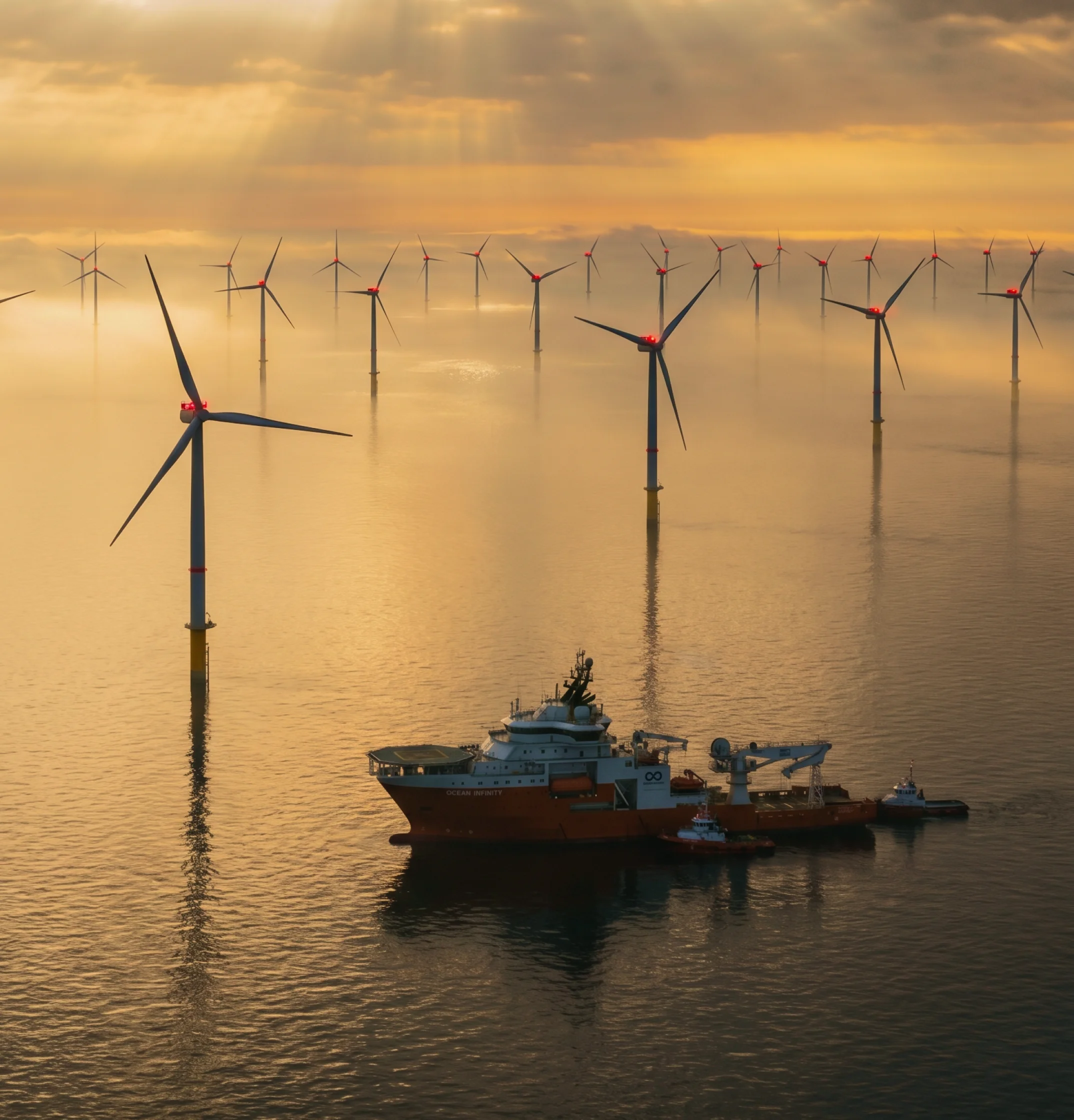
Global offshore wind targets are ambitious: more than 380 GW of capacity is scheduled to be commissioned worldwide by 2032. Yet EPCI contractors, vessel operators, and wind farm developers are discovering that their biggest operational constraint is not steel, turbine nacelles, or subsea cables — it is certified offshore personnel.
The Multi-Tiered Deficit: Where the Gaps Are Widest
The offshore wind workforce gap is not evenly distributed across disciplines. While baseline deck crews and general vessel personnel can be recruited with standard STCW qualifications, the bottleneck concentrates sharply in three specialist areas:
Subsea Cable Jointers & Testers
High-voltage 66kV and 132kV inter-array and export cable termination requires specialized OEM sign-offs that take years of offshore seasoning to master.
Geotechnical Rig Crewing
Downhole CPT operators, seabed frame technicians, and geotechnical drillers familiar with turbulent continental shelf geology are at peak utilisation.
Turbine Commissioning Leads
Technicians certified on next-generation 14MW–16MW direct-drive platforms who possess valid GWO Enhanced First Aid, Slinger Signaller, and Blade Inspection credentials.
Cross-Qualifying Oil & Gas Specialists
The fastest and most reliable route to bridge this gap has proven to be the active cross-skilling of seasoned oil and gas professionals. Marine engineers, electrical technicians, and dynamic positioning operators who already possess extensive deepwater experience have the high-consequence safety mindset that cannot be taught in a classroom.
By pairing standard OPITO baselines with targeted GWO (Global Wind Organisation) modules — including Working at Heights, Sea Survival, and Manual Handling — operators can compress the ramp-up time from 18 months to just 6 weeks for experienced offshore marine talent.
The Ruvira Perspective
"Operators who wait until 60 days before turbine installation campaigns to source specialist crews are inevitably facing vessel standby day rates upwards of $150,000. Forward-looking developers are contracting talent pools 9 to 12 months ahead, locking in certified multidisciplinary teams."
Strategic Solutions for Forward-Looking Developers
- Multi-Year Framework Agreements: Securing dedicated crew pools across consecutive project seasons to eliminate annual remobilisation risk.
- Standardised Dual-Certification: Sponsoring technicians for dual GWO and OPITO cross-qualification to deploy seamlessly across hybrid energy portfolios.
- Fast-Track Academy Programmes: Partnering with specialised marine crewing agencies to train onshore electromechanical graduates in simulated offshore turbine nacelles.
Mobilise Certified Offshore Wind Specialists
Ruvira Offshore provides GWO-certified turbine technicians, cable installation engineers, and specialized marine crews for offshore wind projects worldwide.